
Jump to a section
- What makes a gutter seamless?
- Seamless or sectional: how do they compare?
- How is a seamless gutter fitted?
- Seamless gutter terms
- Which sizes and colors are available?
- What does seamless gutter cost?
- Why seamless suits the local climate
- Access for the machine
- Which corner type should I ask for?
- What does a seamless job look like on the day?
- Seamless steel and copper
- Looking after a seamless system
- Where seamless helps most around Oregon City
What makes a gutter seamless?
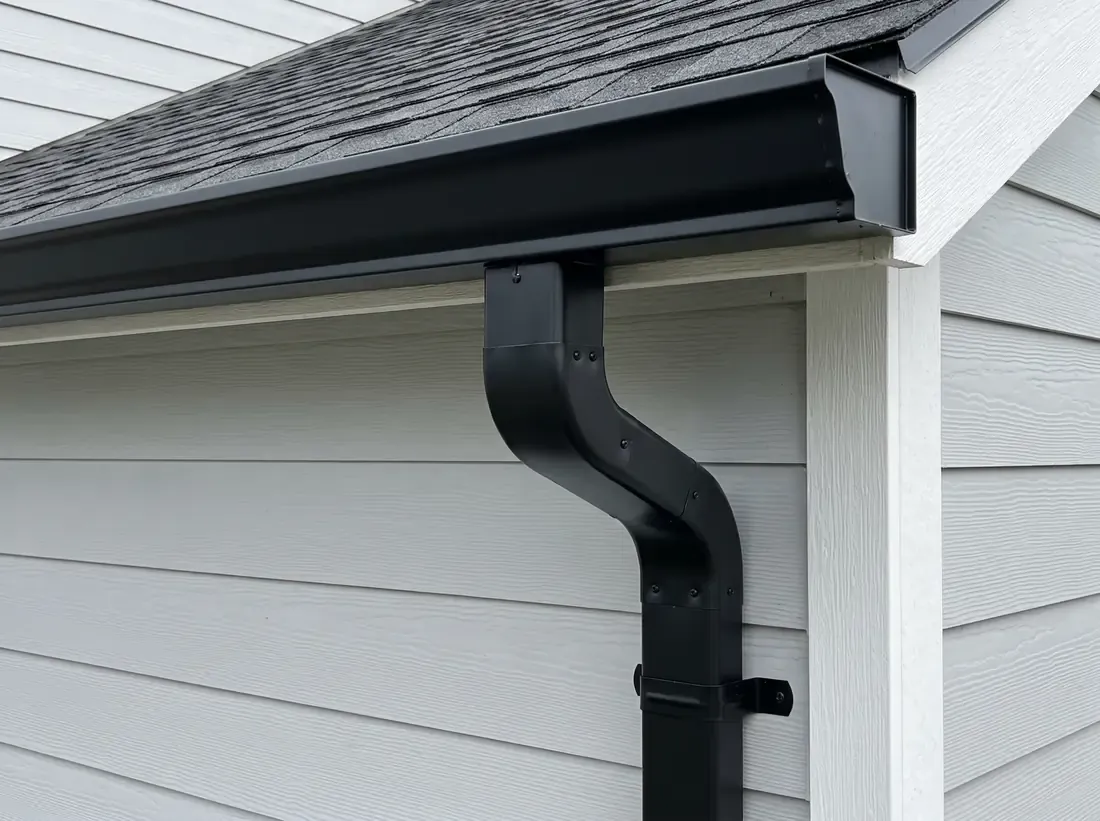
The contractor feeds flat coil through rollers that bend it into a K-style profile and cuts it to the measured length of each eave. A 45-foot rear eave becomes one piece. Only corners, end caps and outlets need sealing, which leaves far fewer places for the long wet season to find a way out.
Seamless or sectional: how do they compare?
| Point | Seamless aluminum | Sectional |
|---|---|---|
| Seams within a run | Only at corners | One at each 10 or 20 foot piece |
| Where it is made | In your driveway, cut to fit | In a factory, sold in set lengths |
| Where leaks start | Corners, end caps, drops | The same, plus each splice |
| Metals offered | Aluminum chiefly, some steel or copper | Vinyl through to copper |
| Installer | A crew with a forming machine | A crew or a handy owner |
How is a seamless gutter fitted?
- Measure each eave and mark corners, valleys and outlet positions.
- Check and repair fascia; add drip edge where needed.
- Run the coil through the machine to make each length.
- Cut outlets, fit end caps and form or fit corners.
- Seal every joint and rivet corners.
- Hang on screwed hidden hangers with a slight fall to each outlet.
- Fit leaders, elbows and straps, and test with water.
Seamless gutter terms
| Term | In plain words |
|---|---|
| Coil | The roll of painted sheet metal fed through a seamless gutter machine |
| K-style | The flat-backed profile with a decorative front, sold mainly in 5 and 6 inch widths |
| Gauge | How heavy the metal is; aluminum comes in .027 or .032 inch, copper in 16 or 20 ounce |
| Hand-cut miter | A corner shaped on site from the gutter itself, leaving just one seam |
| Box miter | A ready-made corner fitting that both gutter ends slide into |
| Strip miter | A field-made corner where two angle-cut ends are joined with a riveted, sealed band |
| End cap | The flat piece that seals the open end of a gutter |
| Expansion joint | A slip joint in an extra-long gutter so heat and cold do not tear the seams |
Which sizes and colors are available?
K-style seamless comes in 5-inch and 6-inch widths. Most homes in Oregon City use .032-inch coil, which resists dents better than .027. Coil comes prepainted in many colors, so gutters can match trim or contrast with it.
What does seamless gutter cost?
Price guides such as Angi and This Old House put fitted seamless aluminum at about $9 to $13 a foot for 5-inch and $12 to $18 for 6-inch. Corners, height, trim repairs and leaders affect the final price.
Why seamless suits the local climate
With about 45 inches of precipitation a year, most of it falling from November through March, a gutter can stay wet for weeks at a time. Every joint is a spot where aged sealant eventually lets go. Removing most joints means fewer drips onto trim over the life of the system.
Access for the machine
The trailer needs to park reasonably close to the house. On steep driveways in Canemah or West Linn, or long rural lanes near Beavercreek, mention access on the call.
Which corner type should I ask for?
With seams gone from the straight runs, the corners carry most of the leak risk, so the way they are built is worth asking about.
| Corner | How it is made | Seams | Notes |
|---|---|---|---|
| Hand-cut miter | Shaped on site from the run itself | One | Tidiest finish; relies on skill |
| Strip miter | Two angled ends joined with a riveted band | One, covered by the strip | Common and sturdy |
| Box miter | Factory corner both ends slide into | Two | Quick; more sealant lines to age |
What does a seamless job look like on the day?
The trailer arrives with coil in the chosen color. Old gutters come down first and the fascia gets checked. Then each eave is measured again, the coil is run through the machine and the new length is carried up and hung. A crew of two can usually work around a typical ranch or two-level house in a single day, longer where trim needs replacing or the lot is steep.
Seamless steel and copper
Most seamless work around here is aluminum. Some contractors also run steel coil, which suits shops and barns, and a few form copper. Copper and half-round are more often sectional, soldered at each joint.
Looking after a seamless system
- Clear outlets after the fall leaf drop and again in spring under trees.
- Look at corners each autumn for dark streaks that signal aging sealant.
- Keep ladders off the front lip; lean them on the wall or use a stand-off.
- Wash north-facing runs gently to remove the green film that grows in shade.
- After freezes and storms, check hangers along exposed eaves.
Where seamless helps most around Oregon City
Long rear eaves on two-level homes in Hillendale, Happy Valley and Park Place gain the most, since sectional gutter there would mean several joints in a single run. On small cottages in Canemah or McLoughlin, half-round in sections may suit the house better even with more seams.