
Jump to a section
- How often should gutters be cleaned here?
- What does a gutter cleaning involve?
- Cleaning terms
- Does gutter cleaning need a licensed contractor?
- Doing it yourself
- When guards make more sense
- Booking
- Signs a cleaning is overdue
- Barns, shops and carports
- Roof moss treatment and gutters
- How long a cleaning takes
- What the cleaner should leave behind
- Cleaning and downspout drains
- Cleaning on slopes
- Cleaning schedules by area
- Why debris left on the lawn matters
- Ladder safety
- Cleaning after construction
- A note on gutter vacuums and blowers
How often should gutters be cleaned here?
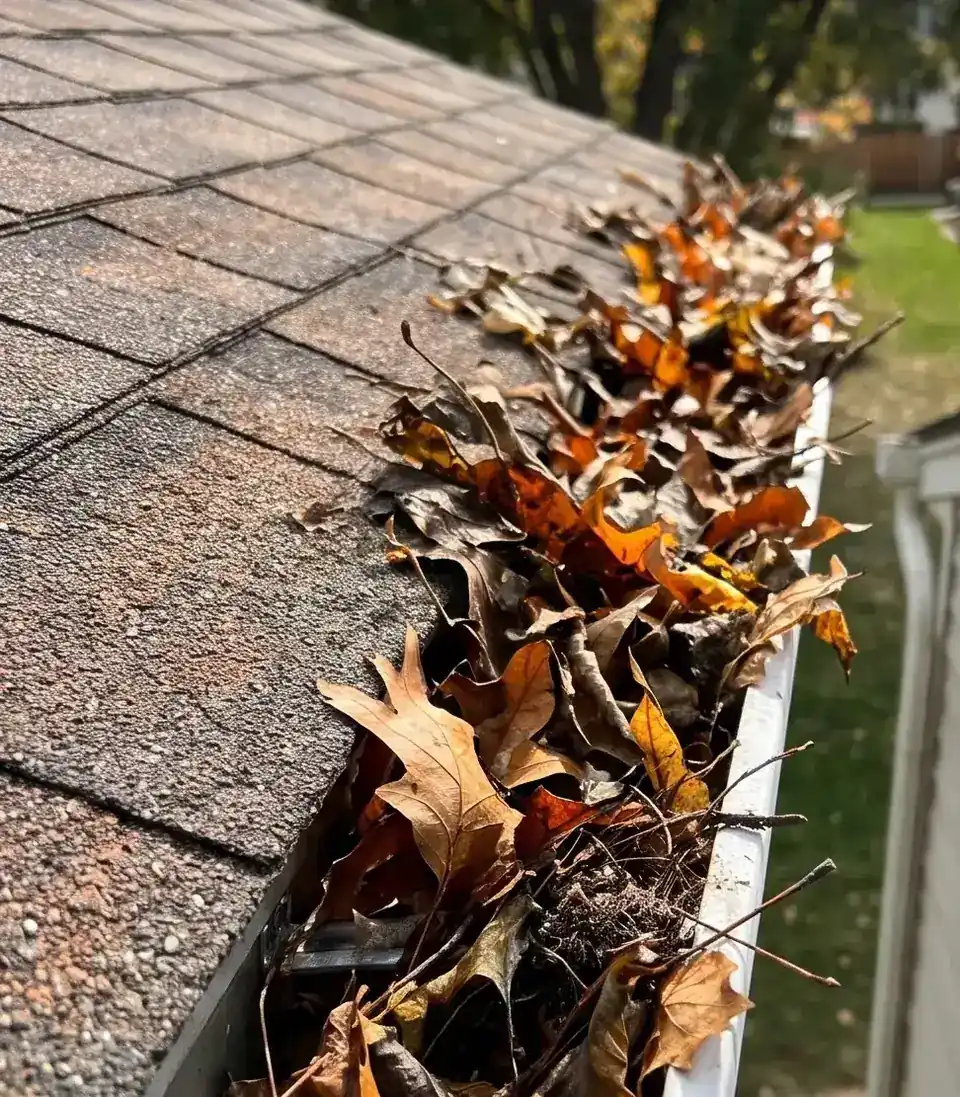
Under big trees, twice a year: once after the leaves are down in late fall and again in spring after maple flowers and seeds. Homes in open subdivisions may need only one cleaning. Gutters under several firs can need more.
| Season | What fills gutters | Suggested action |
|---|---|---|
| Late fall | Maple and oak leaves, needles, cones | Main cleaning once trees are bare |
| Winter | Storm and ice debris, moss | Check after storms and freezes |
| Spring | Maple blossom, seed wings, catkins | Second pass where trees overhang |
| Summer | Needles shed in hot spells | Quick look in September |
What does a gutter cleaning involve?
- Set ladders safely, never leaning on the gutter itself.
- Scoop debris out by hand along each run.
- Bag or remove the debris instead of leaving it on the lawn.
- Flush each run toward the outlet with a hose.
- Clear leaders and elbows; check buried drains accept water.
- Note loose hangers, leaking joints, sags or soft trim for repair.
Cleaning terms
| Term | In plain words |
|---|---|
| Outlet | The short tube set through the gutter floor that hands water down to the leader; also called a drop |
| Elbow | A bent section of leader: A-style angles in or out from the siding, B-style angles left or right |
| Cleanout | A capped fitting at the base of a leader where it enters a buried line, so the pipe can be rodded |
| Rain drain | The buried pipe a leader drops into, common on older Clackamas County lots and often tied to a curb outlet or drywell |
| Moss | Shade-loving growth on damp roofs that breaks off in clumps and settles in troughs |
| Splash block | A ribbed pad under the leader outlet that fans the water out and protects the soil |
Does gutter cleaning need a licensed contractor?
Not in Oregon. The Construction Contractors Board says gutter cleaning alone does not need a CCB license. Repairs and installation do, so if a cleaner offers to fix what they find, ask for their CCB number and check it on the board's search page.
Doing it yourself
| House | DIY practical? | Notes |
|---|---|---|
| Single-level ranch, flat yard | Usually | Sturdy ladder, dry day, a helper |
| Two-level home | Riskier | Tall ladders on hard ground |
| Hillside lot | Not advised | Uneven, sloping footing |
| Steep or mossy roof | Not advised | Slippery surfaces |
When guards make more sense
When firs have you booking a clean-out two or three times a year, fine mesh can repay its cost within a few years. See gutter guards and guards under Douglas fir.
Booking
Cleaners are busiest in November. Booking ahead, or choosing an early spring slot, often means shorter waits. With about 45 inches of precipitation a year, most of it falling from November through March, getting it done before December matters.
Signs a cleaning is overdue
In a heavy rain, look for water pouring over the front, a leader that stays dry while the gutter overflows, or green shoots in the trough. Any of these means the gutter cannot wait for the next booked visit.
Barns, shops and carports
On acreage around Beavercreek, Damascus and Canby, outbuildings under trees need clearing too. Including them in the same booking saves a second call-out.
Roof moss treatment and gutters
Moss on north-facing roofs under firs is common. Treating or removing it is a roofing job. Dead moss washes down over the following weeks, so plan a gutter clean after any roof treatment and ask how the runoff from the treatment will be handled.
How long a cleaning takes
A single-level ranch usually takes an hour or two. A large two-level house with several roof levels, or a hillside home with a tall downhill wall, can take most of a morning. Heavily packed gutters and blocked buried drains add time.
What the cleaner should leave behind
Clear troughs, flushed leaders, debris removed from the beds below and a short note of anything that needs repair. If a leader drain is blocked underground, that may need a separate visit.
Cleaning and downspout drains
Many older homes have leaders feeding buried pipes. A cleaning that clears the gutter but not the drain leaves the problem in place. Ask whether the cleaner checks that leaders and drains take water, and whether clearing a blocked drain is extra.
Cleaning on slopes
On hillside lots, cleaners need stable footing for ladders. Sloping ground below a tall wall may need leveling equipment or roof access. Mention it on the call.
Cleaning schedules by area
In West Linn and Lake Oswego, homes under tall firs often need cleaning in late fall and again in spring, with a check after windstorms. In Gladstone and Milwaukie, big street maples and oaks make late November the key date. In newer parts of Happy Valley and Hillendale, one cleaning a year may be enough. On acreage near Beavercreek and Damascus, include shops and barns in the schedule.
Why debris left on the lawn matters
Leaves and needles left in beds below gutters wash back toward the house and into drains. A good cleaning bags or hauls debris away.
Ladder safety
Most falls during gutter cleaning happen when a ladder slips on soft or sloping ground, or when someone leans too far. Set ladders on firm, level footing, move them often instead of reaching, and avoid wet or windy days. On two-level homes, hiring the work out is usually the safer choice.
Cleaning after construction
Roofing, painting and tree work all drop debris into gutters. Schedule a cleaning after any of those jobs, and check leaders for granules and paint chips.
A note on gutter vacuums and blowers
Some cleaners use vacuums or blowers on long poles. They work well on dry debris but struggle with wet, packed needles, which still need hand clearing.