
Jump to a section
- What kinds of buildings are covered?
- How is commercial gutter work planned?
- Commercial terms
- Metal buildings and farm structures
- Older downtown buildings
- Stormwater
- Maintenance programs
- Information to gather before the visit
- Working at height
- Programs for apartment complexes
- Churches, halls and schools
- Metal roofs and snow
- Common commercial problems
- Choosing a commercial contractor
- Downtown Oregon City buildings
- Farm and rural buildings
- Scheduling
- Gutters on multifamily buildings
- Records and budgeting
- Planning around tenants
- Older industrial sites near the falls
What kinds of buildings are covered?
| Building | Common gutter work |
|---|---|
| Downtown Oregon City commercial blocks | Built-in box gutters, scuppers, collector heads |
| Retail centers and offices | Large K-style or box gutters, big leaders |
| Churches and halls | Tall eaves, half-round or copper |
| Apartment and condo complexes | Long eaves, dozens of leaders, scheduled guard care |
| Farm shops and barns | Box gutters in Galvalume or galvanized steel |
| Schools and public buildings | Heavy-gauge gutters, scheduled maintenance |
How is commercial gutter work planned?
- Survey the roof area, slopes and drainage points.
- Size gutters and leaders to the roof area and scupper flow.
- Agree access: lifts, parking, opening hours and safety zones.
- Remove failed sections or linings.
- Install gutters, collector heads and leaders.
- Connect to the site's storm drainage.
- Test with water and hand over a maintenance schedule.
Commercial terms
| Term | In plain words |
|---|---|
| Box gutter | A deep, square-section gutter used on commercial buildings and sometimes built into old cornices |
| Scupper | A slot through a low roof wall that empties a flat roof |
| Collector head | A funnel box heading a leader, fed by a scupper or by gutters joining |
| Expansion joint | A slip joint in an extra-long gutter so heat and cold do not tear the seams |
| Gauge | How heavy the metal is; aluminum comes in .027 or .032 inch, copper in 16 or 20 ounce |
| Drywell | An underground perforated chamber or rock pit that lets roof water seep into the soil |
Metal buildings and farm structures
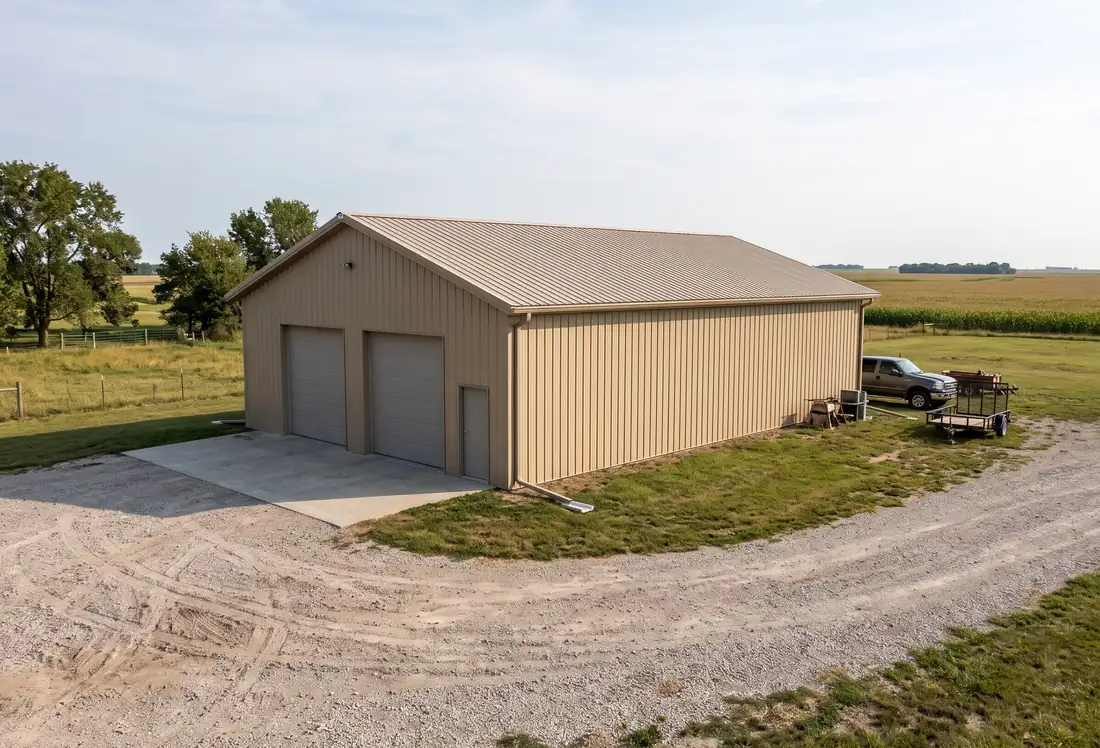
Steel shops and barns shed water fast. Gutters need to be wide and well fixed, with leaders big enough to keep up, and discharge planned away from doors and work areas. Galvalume or galvanized steel box gutters are common.
Older downtown buildings
Some older commercial blocks have box gutters built into the cornice, lined with metal inside the roof edge. When the lining fails, water leaks into the walls. Relining is often the fix.
Stormwater
Larger properties connect to site storm systems. Clackamas County Water Environment Services encourages slowing stormwater and letting it soak in where possible, for example with rain gardens or swales. Check with the city or WES before changing where large roofs discharge.
Maintenance programs
| Building | Suggested schedule |
|---|---|
| Apartment complex under trees | Twice a year plus after storms |
| Retail or office | Once or twice a year |
| Metal shop or barn | Yearly check, after ice storms |
| Church or historic building | Yearly, with a lining check |
Information to gather before the visit
- Any roof plans or measurements from building records.
- Pictures of interior stains, especially near outside walls.
- Where crews can park and load, and hours when work is allowed.
- Who signs off: owner, property manager or board.
- Any drainage conditions attached to the property's permits.
Working at height
Multi-story walls usually mean a boom or scissor lift, fall protection and taped-off zones under the work. Planning those around entrances, parking and deliveries is part of pricing the job.
Programs for apartment complexes
A complex with many buildings and dozens of leaders is best handled with a rolling schedule: each building cleaned and checked on a set rotation, with repairs logged and priced as they are found. That spreads cost and stops small leaks from reaching units.
Churches, halls and schools
Tall eaves, ornamental details and limited access during services or school hours shape these jobs. Copper or half-round may be in place on older buildings; matching it keeps the building's character.
Metal roofs and snow
Standing-seam and corrugated metal roofs shed snow and rain quickly. Gutters on them need to sit where they catch water without being torn off by sliding snow, and leaders need enough size to keep up during a fast melt.
Common commercial problems
| Problem | Usual cause | Fix |
|---|---|---|
| Interior leak near a wall | Failed box gutter lining or overflow | Reline or upsize |
| Collector head overflowing | Leader blocked or too small | Clear or upsize |
| Ice damage on metal buildings | Snow and ice sliding off | Heavier gutter, better fixings |
| Water at entrances | Leader discharging onto walkways | Reroute to drains |
Choosing a commercial contractor
Ask whether the contractor's CCB license covers commercial work, what similar buildings they have done, how they handle lifts and safety, and whether they offer ongoing maintenance.
Downtown Oregon City buildings
Older commercial blocks along Main Street and near the river sit below the bluff, with flat or low-slope roofs draining through scuppers, collector heads and leaders. Many have been altered over the decades, and their drainage may combine old and new parts. Repairs there often start with tracing how water moves across the roof and into the leaders.
Farm and rural buildings
Around Canby, Beavercreek and Damascus, metal shops, equipment sheds and barns need gutters sized for fast runoff, with leaders discharging away from doors and work areas and clear of wells and septic fields.
Scheduling
Commercial work is easiest in the dry months. Emergency repairs after storms are prioritized by contractors where water is entering buildings.
Gutters on multifamily buildings
Apartment and condo buildings often have long, continuous eaves and many leaders discharging near walkways and parking. Clogs or overflows there affect residents directly, causing slippery paths and water near entrances. A regular cleaning schedule, especially after the fall leaf drop, and leaders routed into drains rather than onto paths keep the property safer.
Records and budgeting
For managed properties, a simple log of each building's gutter condition, cleaning dates and repairs helps plan budgets and spot recurring problems before they turn into interior leaks.
Planning around tenants
On occupied buildings, notify tenants of work dates, keep entrances clear and schedule noisy work at sensible hours. Contractors used to commercial jobs plan for this as a matter of course.
Older industrial sites near the falls
The riverfront by Willamette Falls had paper mills for many years; the Blue Heron mill closed in 2011, according to the Willamette Falls history. Older industrial and warehouse buildings in the area often have large metal roofs and box gutters that need specialist repair or replacement as sites are reused.